Partners
University of Miami Miller School of Medicine, School of Nursing and Health Studies, Lowe Art Museum
University of Missouri-Kansas City School of Medicine
Awards
NIGMS SBIR Award 2025
NIH I-Corps Accelerator Program 2026

Partners
University of Miami Miller School of Medicine, School of Nursing and Health Studies, Lowe Art Museum
University of Missouri-Kansas City School of Medicine
Awards
NIGMS SBIR Award 2025
NIH I-Corps Accelerator Program 2026
Strong observation, communication, and collaborative thinking are essential in healthcare. How can students develop these skills before facing the complexity and pressure of clinical practice?
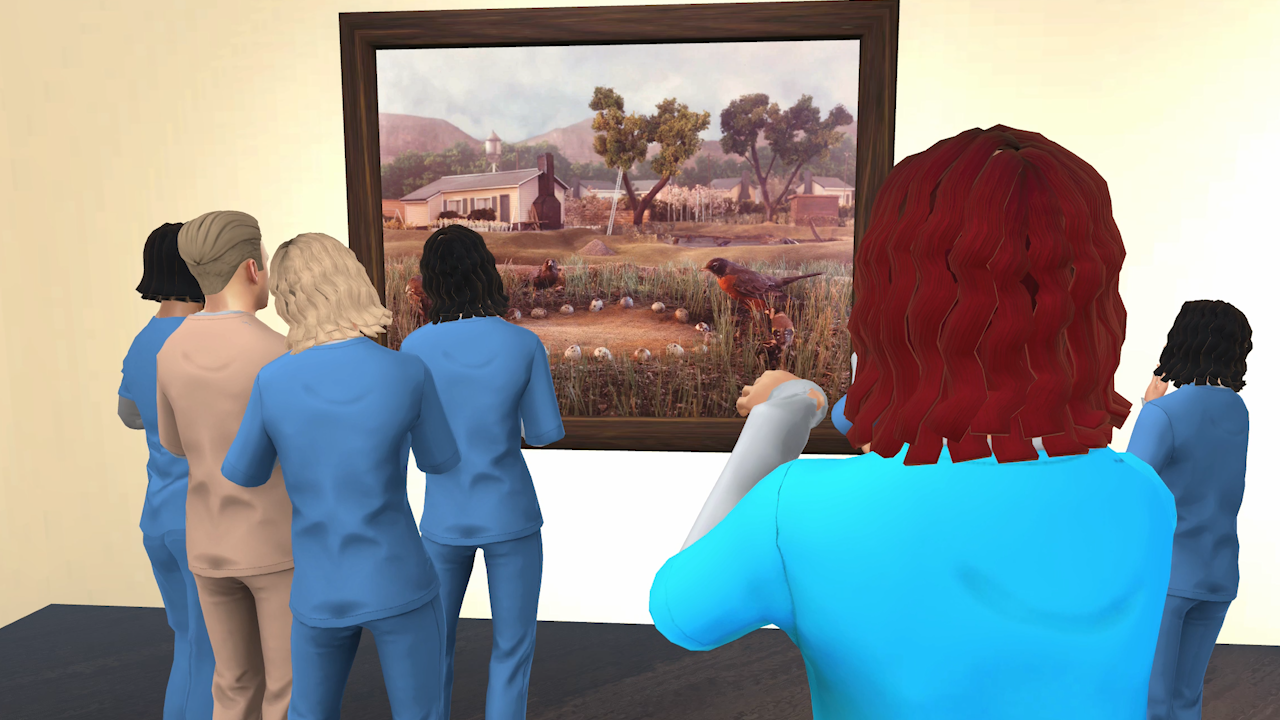
ViTaLS (Virtual Thinking and Learning Strategies) explores one promising approach: bringing Visual Thinking Strategies (VTS) into virtual museum galleries with trained facilitators, where students practice close observation, interpretation, and collaborative meaning-making in a safe environment.
Used in medical education for over 20 years, VTS develops foundational skills including observation, tolerance of ambiguity, evidentiary reasoning, and collaborative problem-solving. Yet access to museum collections and trained facilitators remains limited for health professions schools outside major urban areas. ViTaLS democratizes access, making this approach available virtually, requiring only an internet connection.
In 2025 an National Institutes of Health Small Business Innovation and Research (SBIR) award supported our first study with the University of Miami Miller School of Medicine and School of Nursing and Health Studies.
Twenty-nine students from nursing, medicine, and physical therapy participated in three interprofessional cohorts, each completing three VTS sessions with a trained facilitator in our virtual museum environment.
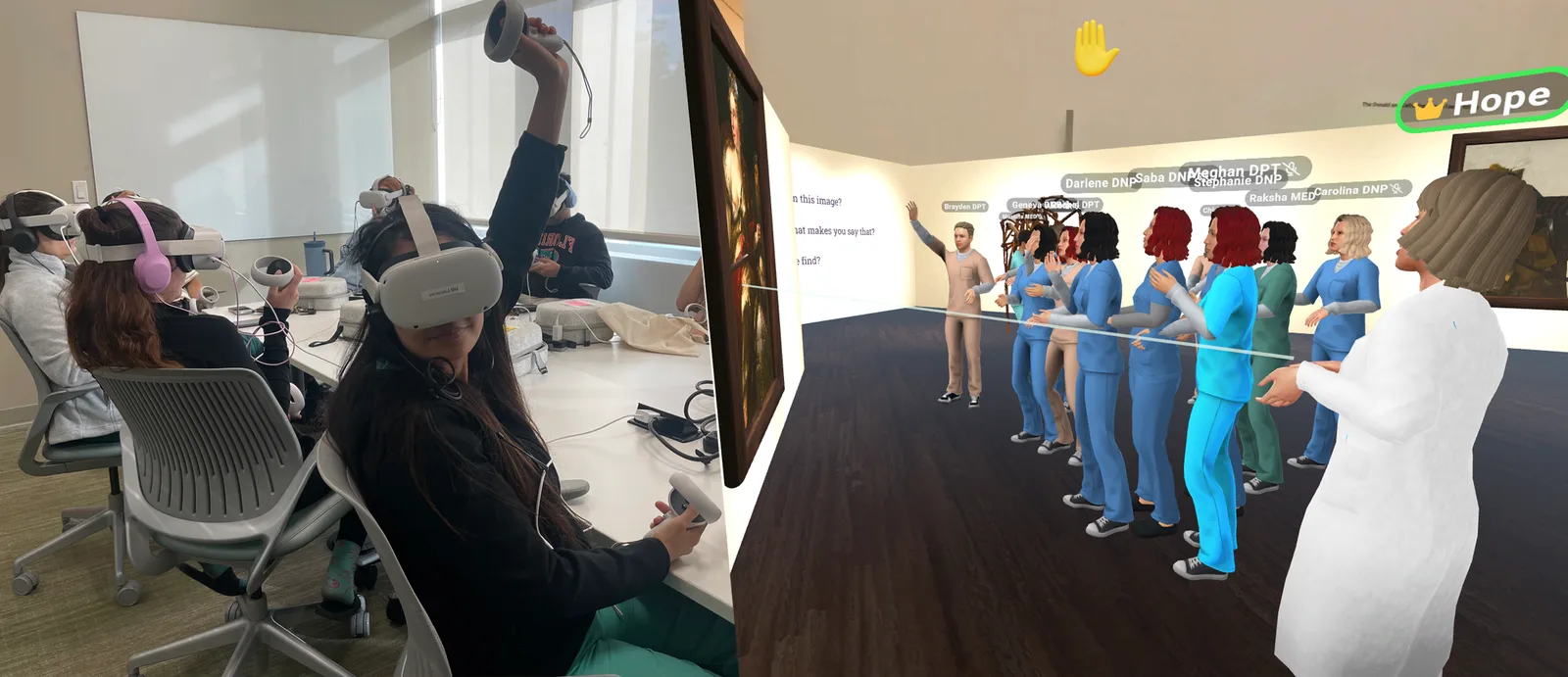
Our findings are encouraging, including improvements in students’ tolerance of ambiguity, and comfort learning in virtual reality. The study provided initial evidence of ViTaLS’ potential in healthcare education.
In March 2026, we continued this exploration through a paid pilot at the University of Missouri–Kansas City School of Medicine. Forty medical students, organized into four cohorts of ten, participated in one-hour sessions featuring two VTS art conversations. Students and faculty recognized connections between the skills practiced and the demands of clinical interactions and teamwork.
In summer 2026, ViTaLS was selected for the NIH I-Corps Accelerator program. Through 124 interviews with healthcare education leaders, faculty, and educators, we explored how medical humanities, simulation, and interprofessional education communities approach teaching and assessing communication and collaborative thinking.
The interviews revealed a shared commitment to developing these capabilities, alongside differences in how disciplines define, teach, and measure them. This highlighted an opportunity to bridge perspectives that too often remain siloed.
We’ve prepared a report sharing these insights and identifying opportunities for greater collaboration.
Our research and stakeholder conversations are shaping ViTaLS’ next chapter. They point to an opportunity to bring humanities-based learning into healthcare education through experiences that encourage students to observe carefully, consider different interpretations, and build understanding together.
ViTaLS offers a promising environment for practicing these skills, connecting humanities content with clinically relevant curricula, and exploring new approaches to assessment. Our work has generated encouraging early evidence and a clearer direction for further development.
We’re seeking partnerships with medical schools, faculty, researchers, and healthcare education leaders interested in developing students’ observation, communication, and collaborative thinking skills. Through research partnerships, curriculum integration, and pilot implementations, we welcome opportunities to test ViTaLS, learn from students and educators, and discover where it can make the greatest contribution.
Communication and teamwork are central to safe, thoughtful healthcare. We look forward to exploring ViTaLS’ potential with additional partners who share that vision.
Contact Us.